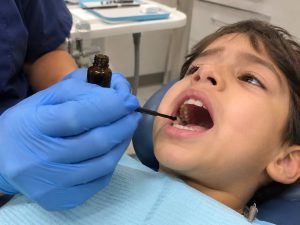
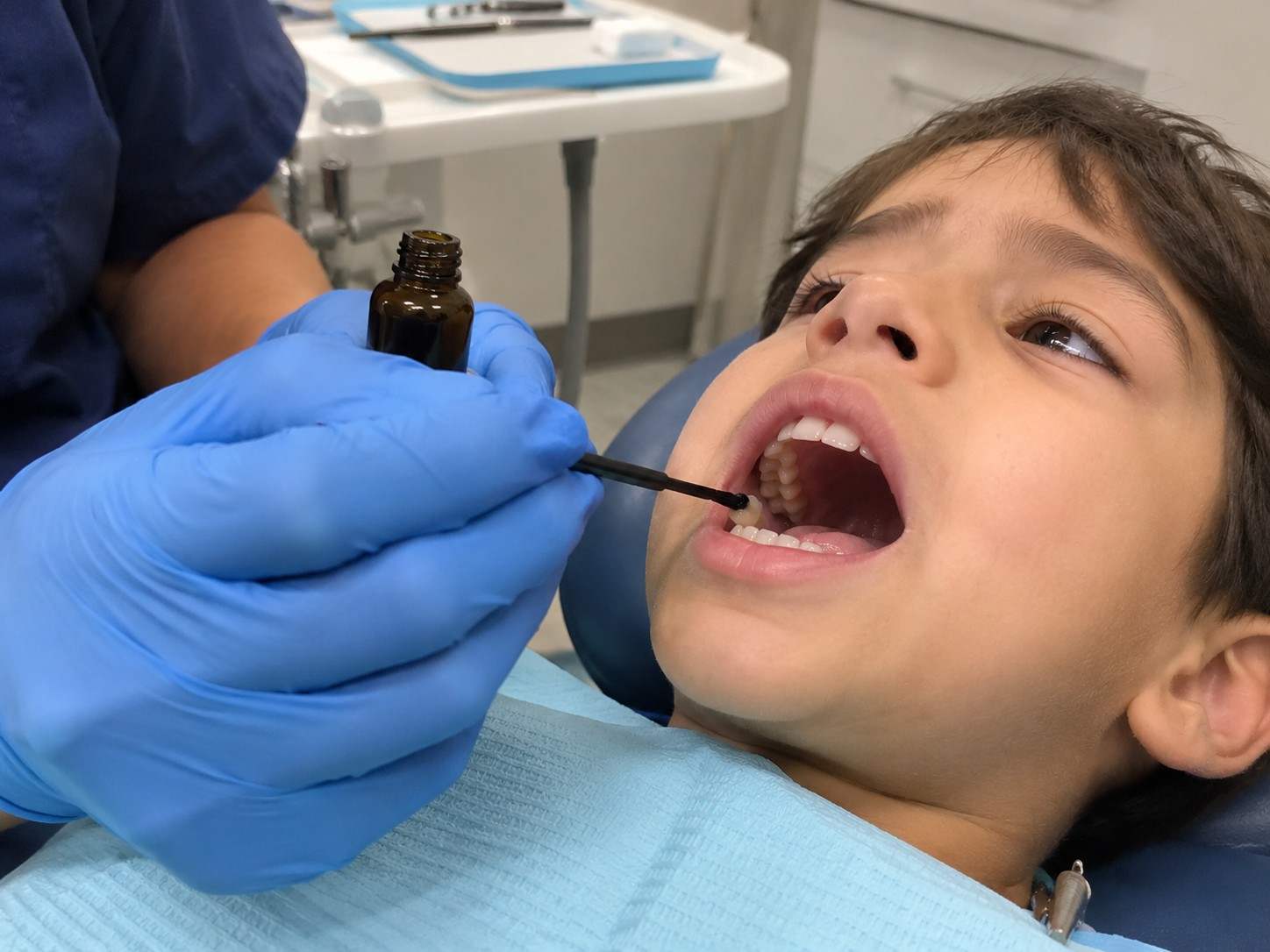
Silver diamine fluoride (SDF) is a liquid that can help slow or stop some types of tooth decay. It may be used for children when regular dental treatment is difficult or when waiting may worsen the decay. A dentist can examine the tooth and determine whether silver diamine fluoride in South Miami is a suitable option. SDF is not right for every cavity. After treatment, the decayed part of the tooth may turn dark or black.
Understanding how SDF works, its benefits, and its staining effect can help parents make informed decisions about their child’s dental care.
What Is Silver Diamine Fluoride?
Silver diamine fluoride is a liquid applied directly to certain areas of tooth decay. It contains silver and fluoride, which work in different ways to help manage decay.
SDF may help:
- Slow or stop certain active areas of decay.
- Reduce the need for immediate drilling in some cases.
- Make dental care easier for children who have difficulty with traditional treatment.
- Help manage decay while a longer-term treatment plan is considered.
SDF does not rebuild a decayed tooth or restore its original shape. Further treatment may still be needed depending on the tooth and the extent of the decay.
Does SDF Stain Children’s Teeth?
Yes. SDF can turn areas of active tooth decay dark brown or black after treatment. This colour change is an expected effect and usually affects the decayed area rather than healthy tooth structure.
The dark colour can be more noticeable on visible front teeth. For some families, the benefit of stopping or slowing decay may outweigh the change in appearance. In other cases, a different treatment may be preferred, especially when appearance is an important concern.
Healthy tooth areas unaffected by decay do not usually turn black simply because SDF was applied.
Is Silver Diamine Fluoride Safe for Kids?
When appropriately selected and applied by a trained dental professional, SDF is generally considered a useful option for managing certain areas of tooth decay in children.
A dental assessment by a pediatric dentist near you is important because SDF may not be suitable for every child or every tooth. The dental team may consider:
- The child’s age and overall health
- The location and size of the decay
- Whether the tooth is causing pain
- Whether there are signs of infection
- Whether the tooth can be restored or needs another form of treatment
Parents should also tell the dental team about allergies, health conditions, and any medicines the child takes.
When Might SDF Be Recommended?
SDF may be considered when a child has certain areas of tooth decay that can be managed without immediate traditional restoration. It may be useful when cooperation, age, access to care, or the child’s dental needs make conventional treatment difficult at that time.
A pediatric dental office in South Miami can examine the affected tooth and determine whether SDF is an appropriate option.
SDF may be especially useful as part of a broader treatment plan rather than as a replacement for all dental care.
What Are the Benefits of SDF?
SDF can offer several practical benefits in suitable cases.
- It can be applied without using a dental drill.
- Treatment can be relatively quick.
- It may help slow or stop certain active cavities.
- It may help delay more extensive treatment in some situations.
- It can be useful for children who have difficulty cooperating with longer dental visits.
However, SDF does not remove the need for regular dental examinations, daily brushing, or other recommended care.
Can the Black Stain From SDF Be Removed?
The dark colour caused by SDF on treated decay is not simply a surface stain that can be brushed away. It results from the treatment reacting with the decayed tooth structure.
If appearance is a concern, the dental team can discuss other options. In some cases, the tooth may later be restored with a filling or another suitable treatment that covers the discoloured area.
Make an Informed Choice About SDF!
A dark cavity can be worrying, but an SDF may help slow or stop some types of tooth decay without needing immediate drilling. The best treatment depends on the condition of the tooth, the child’s needs, and the family’s preferences.
Schedule an evaluation with Dr. Bob, a pediatric dentist in South Miami, to discuss whether SDF or another treatment may be appropriate for your child’s tooth.
FAQs
Does SDF hurt when it is applied?
The SDF application itself does not involve drilling the tooth. However, a child with an active cavity may already have sensitivity or discomfort. The tooth should be assessed before treatment.
Will SDF make all of my child’s teeth black?
No. The dark colour mainly develops where SDF comes into contact with active tooth decay. It does not normally turn healthy teeth black.
How long does SDF stay on a tooth?
SDF is intended to remain effective after application, but its effect can vary. Some children may need repeat applications or additional treatment based on the condition of the tooth.
Can SDF be used on baby teeth?
Yes, SDF can be used on certain baby teeth when the tooth and cavity are suitable. A dental assessment is needed to decide whether it is an appropriate choice.